FLAG

11th State Scientific Research and Testing Range at Emba
167th Training Center for the Combat Employment
of Ground Forces Air Defense
165th Independent Mixed Aviation Regiment at Karas airport
The Sixties:
The Soviet Army traditionally tested its air defense systems at the Donguzskaya test range, located in the Orenburg region in the southern Urals. With the introduction of the 2K11 Krug Soviet medium-range SAM system in the late 1950s, the air defense systems to be tested became highly complex. The Donguzskaya test range was no longer suitable for conducting these research and testing tasks.
Consequently, in 1960, the Emba test range was established in the within the territory of the Kazakh Soviet Socialist Republic pursuant to a decree issued by the Soviet Ministry of Defense on May 10, in accordance with Resolution No. 188-80 of the Central Committee of the CPSU and the Council of Ministers of the Soviet Union, “On the Creation of a Prototype of the Krug Air Defense Missile System.”
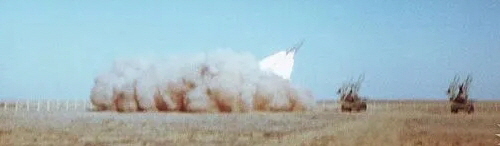
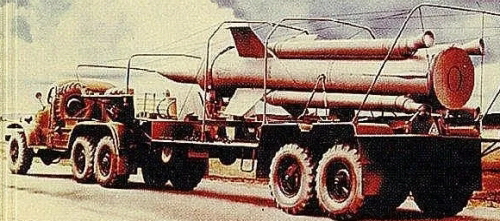
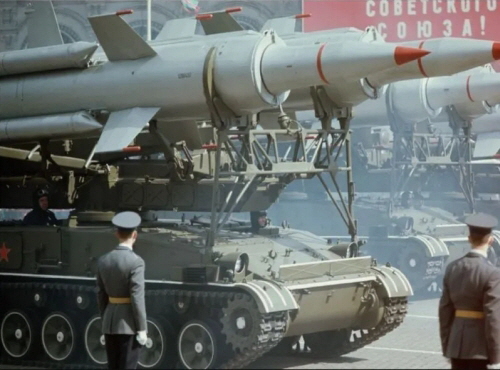
Between 1960 and 1964, 130 3M8 Krug test missiles were launched from the Emba test site.
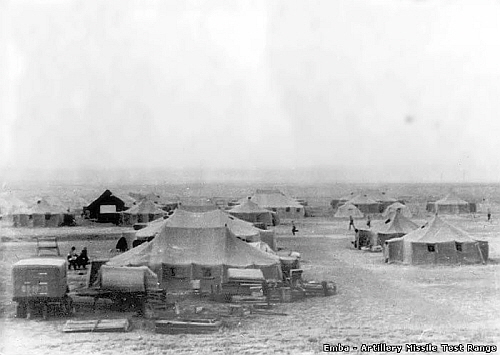
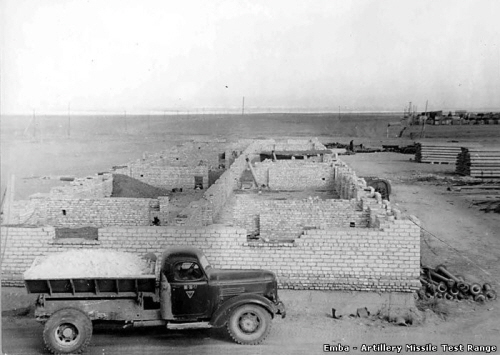
The closed military town of Emba-5 in the 1960s. Photo: V.K. Smirnov
Source:
In 1960 construction began on a military settlement known as Emba-5 to house the range’s personnel and their families 180 km (112 mi) from Aktyubinsk city.. But the living conditions remained extremely harsh throughout the 1960s.
To support the range’s operations, a new aviation unit was formed in 1962 — the 165th independent Mixed Aviation Regiment — which operated IL-28 'Beagle', Li-2 'Cab' aircraft and Mi-4 ‘Hound’ helicopter. The unit also deployed M-15 (MiG-15 'Fagot') and M-28 (IL-28 'Beagle') target drones, which had been converted from decommissioned Air Force models.
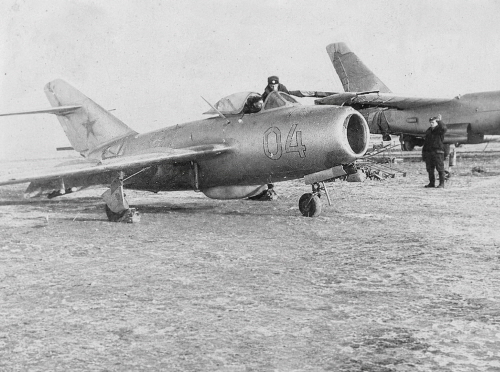
An unarmed M-15 (MiG-15 ‘Fagot’) aerial target with Two infrared lamp under the wing, and an IL-28 behind it at Emba. Photo: Golukoe M. A.
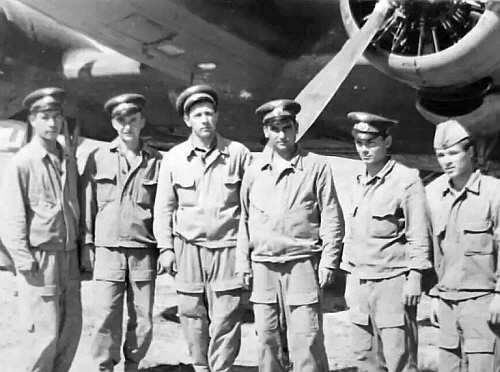
The 165th independent Mixed Air Regiment’s crew in front of their Li-2 ‘Cab’ cargo aircraft.
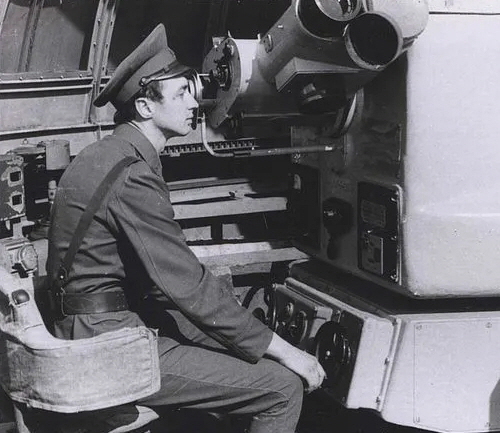
The instrumentation, measuring points and monitoring stations at the Emba test range were fully operational by 1963.. Four towers were built at the Emba test range, equipped with kinetheodolites to track both the target and the missile until the point of impact. In addition to capturing the image of the target, these devices recorded the elevation, azimuth, and timestamp directly onto the film. By processing data from multiple kinetheodolites, technicians could reconstruct and analyze trajectories to determine the exact point of impact or investigate the failed test.
The KFT-10/20 kinetheodolite was operated by a two-man crew: one soldier controlled the azimuth, while the other managed the elevation.
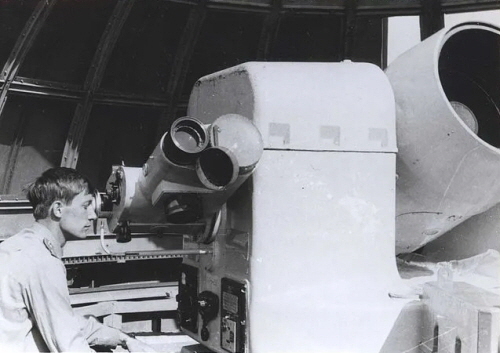
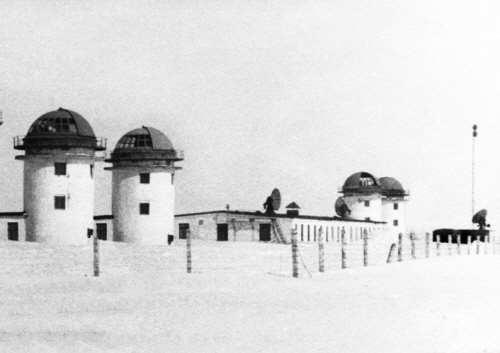
KFT-10/20 kinetheodolite on top of the tower
The four original towers, built in the 1960s at the Emba test range.
Between 1967 and 1969, several organizational changes took place at the Emba test range on the barren Kazakh steppe:
-
In 1967, the 11th State Scientific Research and Testing Range (11 GNIIP) was established to oversee research and evaluation.
-
That same year, field testing began on the new 2K11A 'Krug-A' and 9K33 'Osa' mobile air defense systems designed for the Soviet Army.
-
The local concrete runway at the Karas airfield was constructed between 1967 and 1969, complete with aprons and taxiways. From here, the 165th Independent Mixed Aviation Regiment operated larger Tu-16s and high-speed MiG-21F-13s too.
-
Then, in 1968, the 167th Training Center for the Combat Employment of Ground Forces Air Defense was established at the Emba site. Its purpose was to train air defense units in the operational use of weapons and military hardware, as well as to conduct live-fire exercises for ground forces air defense units and formations.
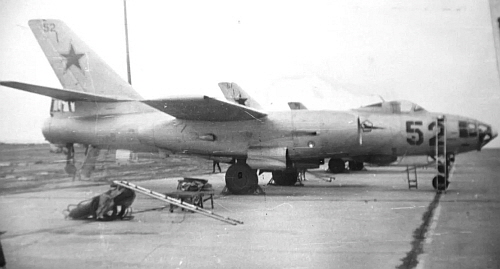
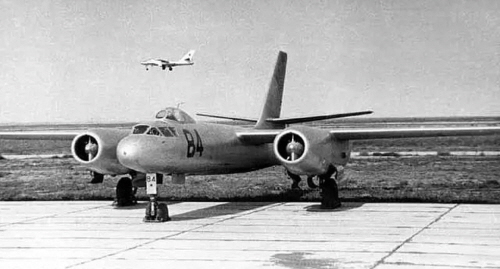
The IL-28 ‘Beagle’ tactical bomber type was used in the 1960s and 1970s as an aerial target and calibration aircraft.
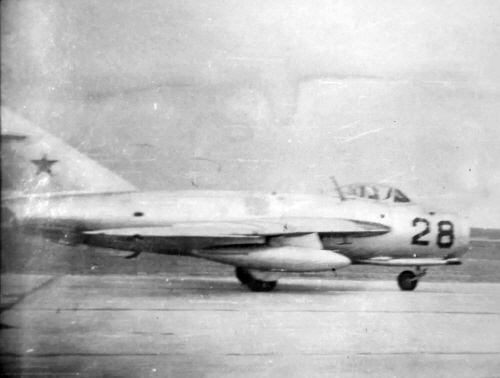
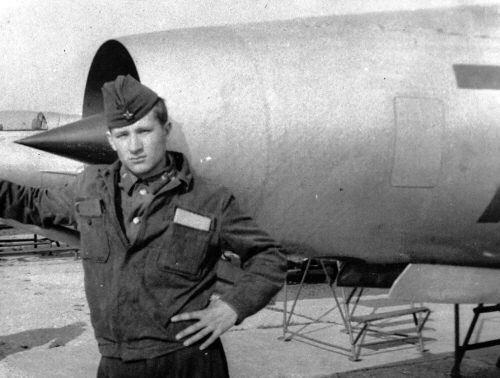
The MiG-17 ‘Fresco-A’ and MiG-21F-13 ‘Fishbed-C’s of the 165th independent Mixed Air Regiment simulated high-speed targets. They were also deployed to intercept and destroy any aerial targets that became uncontrollable.
The Seventies:
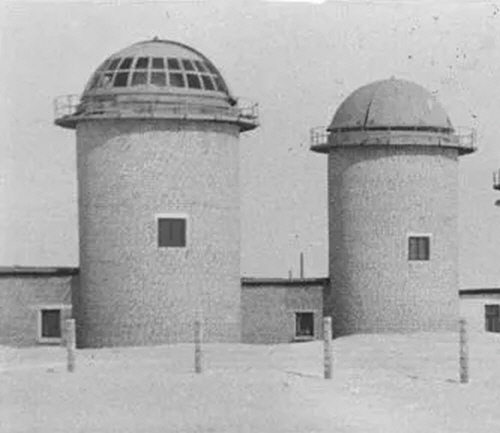
To meet increased testing requirements, two additional kinetheodolite towers were constructed alongside the existing four at the Emba test range.
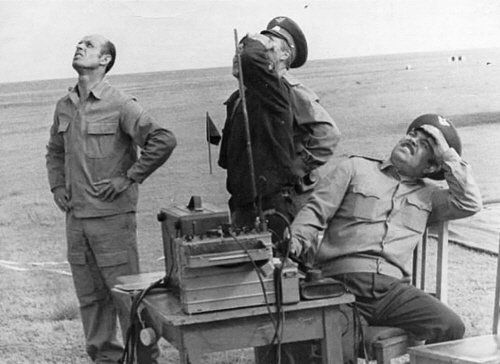
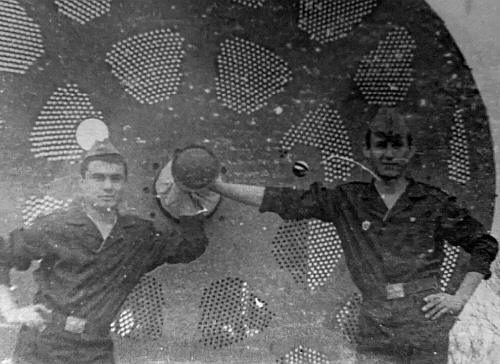
In the 1970s, the Emba air defence center faced an extensive workload. The 11th State Scientific Research and Testing Range (11 GNIIP) conducted state trials for nine new air defense systems between 1970 and 1979.
-
2K11M Krug-М - 1971
-
9K33 Оsа - 1970-1971
-
2K12M1 Kub-M1 - 1972
-
2K12M1 Krug-M1 - 1974
-
9K33M2 Osa-AK - 1974-1975
-
2K12M3 Kub-M3 - 1976
-
2K12M4 Kub-M4 - 1975-1976
-
9K33M3 Osa-AKM - 1979
-
9K37 Buk - 1977-1979
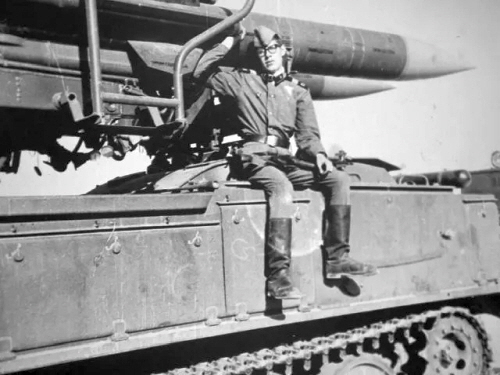
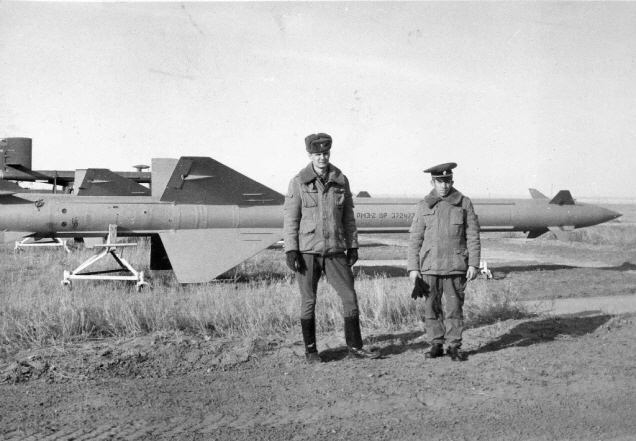
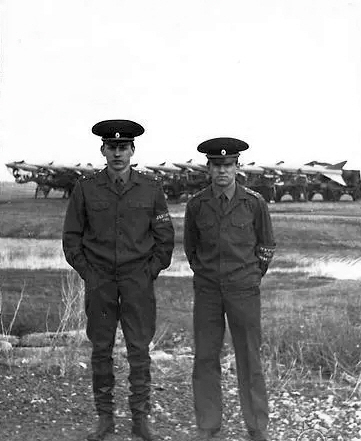
In 1973, the Emba Center was expanded to include an RM-207 air defense target missile battalion. This battalion, whose task was to simulate high-speed ballistic targets during live-fire exercises.The RM-207 was derived from the V–300 missile of the Soviet S-25 'Berkut' air defense system, which was reconfigured as a target missile.
A second part is also expected!